Easy High Protein Bibimbap Meal Prep
Easy Rice Cooker Bibimbap Meal Prep
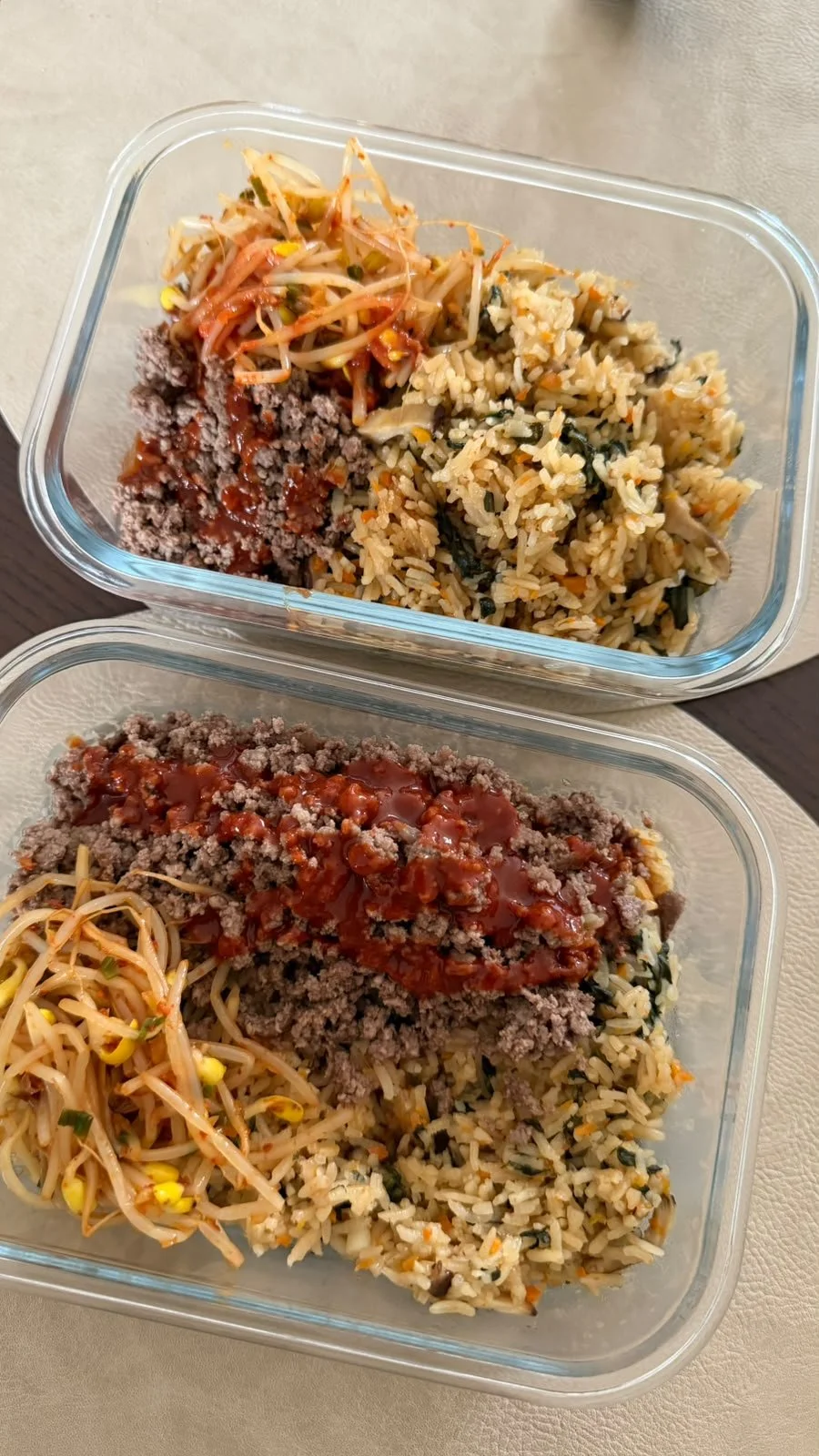
Servings: 8 meal-prep containers (4 days worth if eaten once a day)
Calories: Approximately 500–600 calories per serving
Protein: Approximately 27–30 g per serving
Prep time: 20 minutes
Cook time: 30–40 minutes
If meal prep is going to keep me on track, it still has to look and taste like real food. This easy rice cooker bibimbap is filling, colorful and packed with vegetables, seasoned rice and lean ground beef — without requiring me to stand over the stove cooking every component separately.
The best part is that the vegetables cook right alongside the rice in the rice cooker. I cook the beef separately so I can accurately portion my protein, then finish each container with prepared gochujang bibimbap sauce.
And no, I'm not adding a fried egg. I'm keeping this version simple and around the 500–600 calorie range for an easy lunch or dinner meal prep.
Ingredients
Rice & Vegetables
4½ cups uncooked jasmine rice
3 cups low-sodium chicken broth
1 large carrot, julienned or thinly sliced (about 1 cup)
15 oz / 425 g spinach
360 g shiitake mushrooms, sliced
280 g bean sprouts (as a side/optional)
5 tbsp soy sauce
2 tbsp sesame oil
5 tsp / 15 g minced garlic
3 tsp / 16 g minced ginger
2½ tsp black pepper
(Optional) Beansprout Banchan: 280 g bean sprouts, 2 tbsp low-sodium soy sauce, 1 tbsp fish sauce, 1 tsp sesame oil, 1 tsp minced garlic, 1–2 tsp toasted sesame seeds, and 1–2 green onions, thinly sliced
Beef
30 oz / 850 g 95/5 lean ground beef
2½ tsp salt, or to taste
Black pepper, to taste
Cooking spray
For Serving
1 tbsp prepared gochujang bibimbap sauce per serving
No egg
Instructions
1. Prepare the rice and vegetables
Rinse the jasmine rice under cold water until the water runs mostly clear, then drain well.
Prepare all of your vegetables. Julienne or dice the carrot, slice or dice the shiitake mushrooms and roughly chop the spinach if the leaves are particularly large.
2. Add everything to the rice cooker
Add the rinsed jasmine rice to the bottom of your rice cooker.
Layer the carrots, spinach, shiitake mushrooms and bean sprouts over the rice.
Add the soy sauce, sesame oil, minced garlic, minced ginger and black pepper.
Pour in the 3 cups of low-sodium chicken broth.
Depending on your rice cooker, you may need additional liquid for 4½ cups of rice. Follow your rice cooker's recommended liquid level, counting the 3 cups of chicken broth as part of the total liquid. Keep in mind that the vegetables will also release moisture as they cook.
There's no need to aggressively mix everything together before cooking. The vegetables will cook down substantially.
3. Cook the rice and vegetables
Cook using your rice cooker's regular white-rice setting, approximately 30–40 minutes depending on your machine. Omit the beansprouts that will be used as a separate side.
Once finished, leave the lid closed and allow everything to rest for 5–10 minutes.
Open the rice cooker and thoroughly fluff and mix the rice and vegetables together. You want the vegetables and seasonings evenly distributed throughout the rice.
4. Cook the beef
While the rice is cooking, lightly coat a large skillet with cooking spray and heat over medium-high heat.
Add the 850 g of 95/5 lean ground beef.
Season with salt and black pepper and cook, breaking the beef into small pieces as it browns.
Continue cooking until the beef is completely cooked through and no pink remains. Drain excess liquid or fat if necessary.
Keep the beef separate from the rice mixture. This makes portioning your meal prep much easier and more consistent.
Bean Sprout Banchan — 8 servings
Ingredients: 280 g bean sprouts, 2 tbsp low-sodium soy sauce, 1 tbsp fish sauce, 1 tsp sesame oil, 1 tsp minced garlic, 1–2 tsp toasted sesame seeds, and 1–2 green onions, thinly sliced
Instructions: Blanch the bean sprouts in boiling water for 1–2 minutes, until just tender but still slightly crunchy. Drain very well and let them cool slightly. Toss with the soy sauce, fish sauce, sesame oil, garlic, sesame seeds and green onion until evenly coated.
Portion: Divide into 8 × 35 g servings.
Estimated calories: approximately 20–25 calories per serving.
How to Portion Into 8 Meals
For each meal-prep container, add:
300 g cooked rice + vegetable mixture
85 g cooked 95/5 lean ground beef
1 tbsp prepared gochujang bibimbap sauce
No egg
Total Needed for 8 Containers
You'll portion approximately:
2,400 g cooked rice + vegetable mixture
680 g cooked beef
8 tbsp prepared bibimbap sauce
Meal-Prep & Storage
Allow the food to cool slightly before covering your meal-prep containers and transferring them to the refrigerator.
Keep refrigerated and enjoy within approximately 3–4 days. If you're preparing all eight meals at once and won't eat them within that window, freeze the later portions instead.
For the best texture, you can also keep the bibimbap sauce in a small separate container and add it after reheating.
When you're ready to eat, reheat the rice, vegetables and beef until piping hot. Add the prepared gochujang bibimbap sauce and mix everything together.
If the rice has dried out slightly in the fridge, add a small splash of water before microwaving and loosely cover the container. This helps steam the rice and bring back some of its original texture.
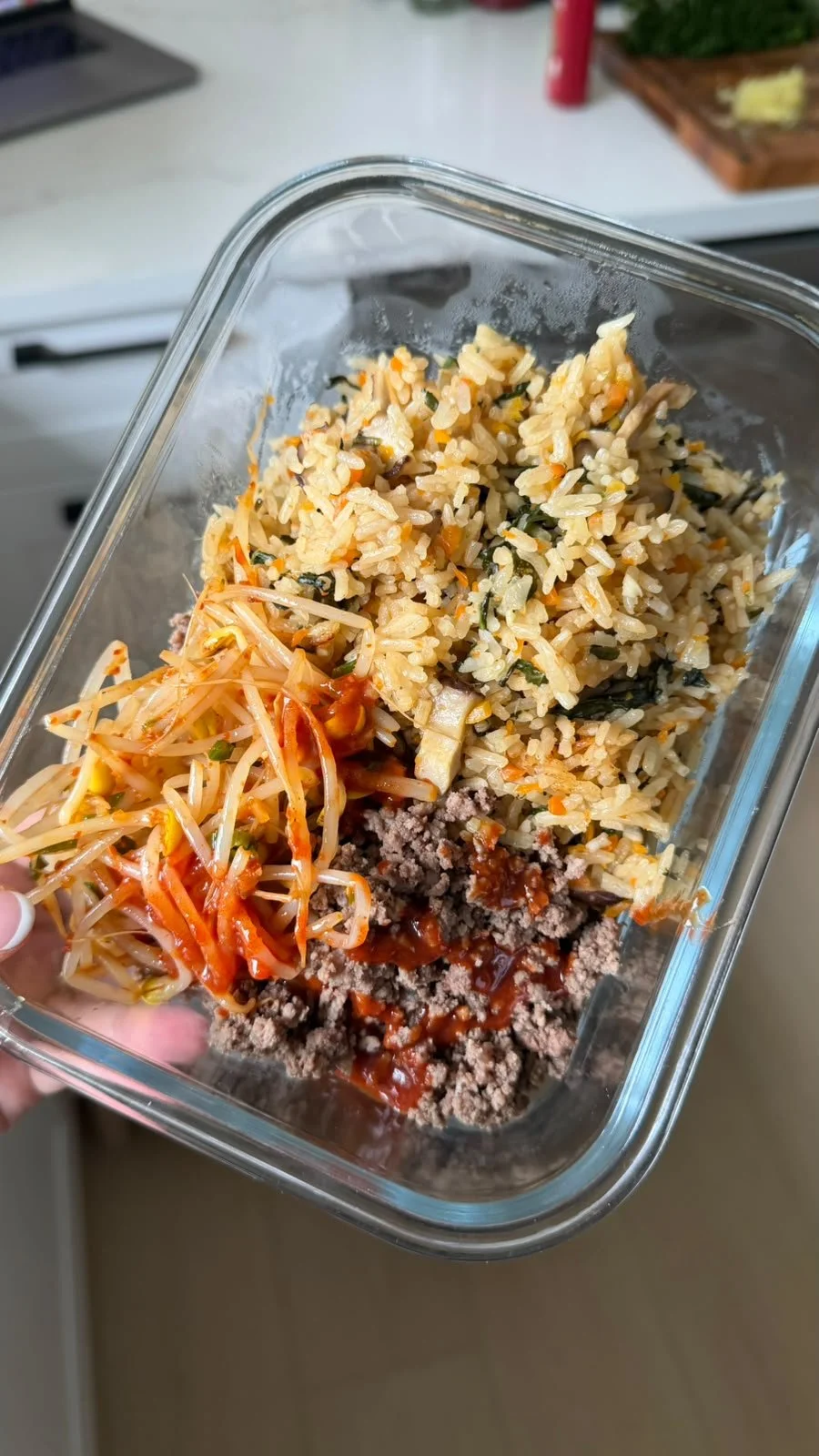
Meal-Prep Tip
Traditional bibimbap is often topped with a fried egg, but I skipped it for this version. I'd rather use those calories for a generous portion of seasoned rice, vegetables and beef while keeping the entire meal around the 500–600 calorie range.
And that's really my goal with meal prep: I don't want something that looks or tastes like "diet food." I want a container that still looks colorful, filling and exciting when I open the fridge.
This one checks all the boxes. Lots of vegetables, a good portion of protein, carbs that actually make the meal satisfying, and enough gochujang sauce to bring everything together.
Meal prep doesn't have to mean sad, boring food.